

Table of Contents
- What Wrapping Paper Thickness Actually Means
- Understanding GSM for Wrapping Paper
- Wrapping Paper Paper Weight and How It Affects Quality
- Thick Gift Wrapping Paper vs. Thin: What's the Difference
- Heavy-Duty Wrapping Paper for Large and Challenging Gifts
- Paper Finish and Thickness: How They Work Together
- How to Choose the Right Thickness for Your Gifts
- Quality Indicators Beyond Thickness
- Frequently Asked Questions
Last Updated: October 21, 2026
What Wrapping Paper Thickness Actually Means
Thickness is one of the most misunderstood wrapping paper specs. Most people assume thicker is automatically better, but wrapping paper thickness is more nuanced. At Holiday Wrapper, understanding what thickness does and doesn't do changes how you select paper.

Thickness refers to how much material you're working with, measured in GSM (grams per square meter), mil, or pound rating. A thicker sheet resists tearing, folds with cleaner creases, and feels more premium. But thickness alone doesn't guarantee quality, finish, base material, and moisture handling matter equally.
The real benefit of thicker wrapping paper is durability during wrapping. Thin paper tears around corners and punctures under scissors. Thicker stock forgives these mistakes and holds folds better, less tape, fewer do-overs, and a gift that looks intentional.
Understanding GSM for Wrapping Paper
GSM stands for grams per square meter, the most reliable way to compare wrapping paper density across brands.

Most budget wrapping paper sits at 60-80 GSM, fine for small, soft gifts but prone to tearing on boxes. Our Christmas Jingle Balls Wrapping Paper and other designs use 90 GSM fine art paper, balancing premium feel with practical workability.
GSM directly correlates with folding performance. At 90 GSM, paper creases sharply without cracking and resists puncturing on tight corners. The higher the GSM, the more forgiving the paper during wrapping.
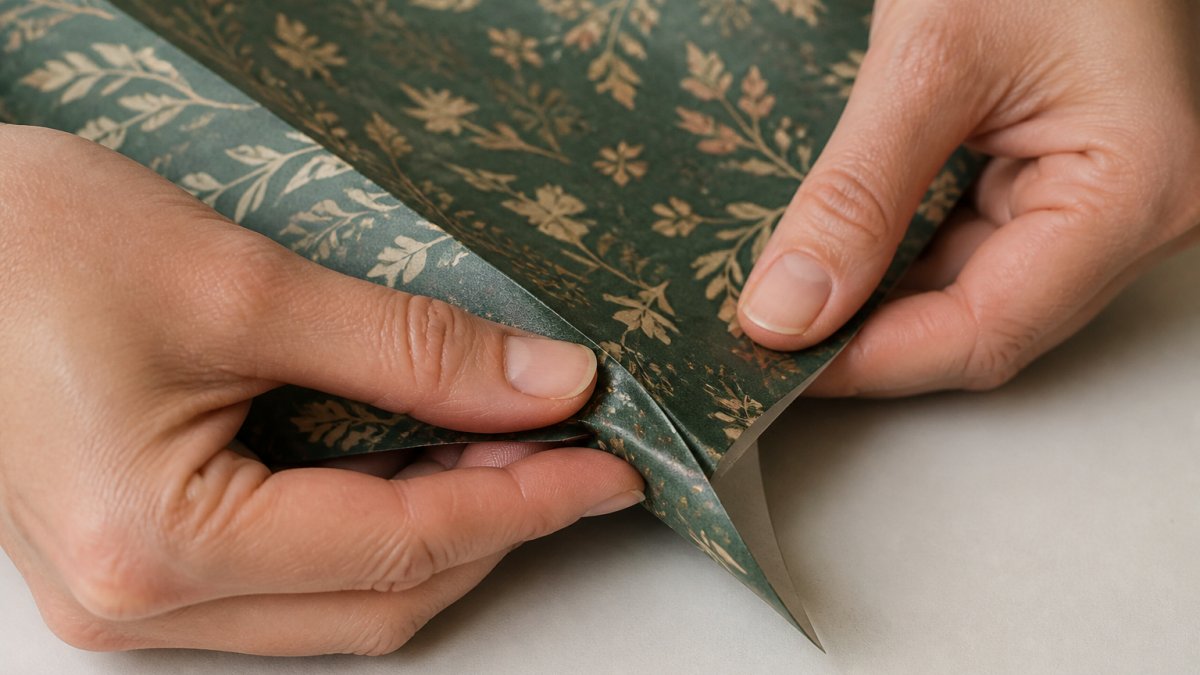
To understand GSM, hold a 60 GSM and a 90 GSM sheet side by side. The heavier paper feels stiffer and flexes less, exactly what you want for clean folds and secure wraps without excessive tape.
Wrapping Paper Paper Weight and How It Affects Quality
Paper weight is another term for the same concept as GSM, measured differently by region. In the US, it's often expressed in pounds per ream (500 sheets), sometimes called "pound rating" or "text weight."
Heavier paper feels more luxurious and performs better. A 90 GSM wrapping paper feels substantial, resists wrinkling in storage, and lies flat instead of curling at the edges when unrolled.
Paper weight also affects ink absorption. Heavier stock takes ink more evenly, so premium designs look crisper and more vibrant, with colors that don't bleed or fade as quickly on the denser substrate.
During folding, lighter paper (under 80 GSM) needs more tape because it lacks body to hold tension. Heavier paper (90+ GSM) holds folds naturally, so you use less tape and get a cleaner finish.
Thick Gift Wrapping Paper vs. Thin: What's the Difference
The differences between thick and thin wrapping paper become obvious the moment you start wrapping. Thick paper is forgiving; thin paper is punishing.
With thin paper (60-75 GSM), you fight the material: scissors snag, creases crack, sharp corners puncture. You use extra tape to compensate, and the gift looks taped together rather than elegantly wrapped. On large gifts, thin paper can even tear under its own weight.
Thick wrapping paper (90+ GSM) handles these challenges effortlessly: sharp creases without cracking, clean scissor cuts, and easy repositioning without tearing. The finished wrap looks polished because the paper holds your work together.
Tear Resistance and Durability
Tear resistance is where thickness makes the biggest practical difference. Thin paper tears under folding pressure, when scissors cut at an angle, and when you reposition it around a box corner.
Thick paper resists these stresses: its denser fiber structure absorbs force instead of separating. You can fold repeatedly and crease hard without splitting, extending the roll's usable life and wasting less paper.
For heavy items or sharp-edged boxes, tear resistance is essential. Thin paper won't survive intact, and visible tears patched with extra pieces destroy the aesthetic.
Handling and Folding Performance
Handling separates good wrapping paper from frustrating paper. Thick stock performs predictably: it doesn't slip, doesn't crinkle unexpectedly, and creases stay where you put them.
Thin paper is unpredictable: it wrinkles as you work, curls at the edges, and slips because there's not enough body to grip. Creases spring back slightly, leaving folds loose and imprecise.
Thick paper also lets you work faster. You're not fighting the material or stopping to smooth wrinkles and reposition shifted sections, the paper cooperates with your technique.
Heavy-Duty Wrapping Paper for Large and Challenging Gifts
Heavy-duty wrapping paper is engineered for situations where standard paper fails. It's typically 100+ GSM, often with reinforced fibers or special coatings for maximum durability and tear resistance.
When to Choose Heavy-Duty Stock
Choose heavy-duty paper for anything with sharp edges, irregular shapes, or significant weight. Picture frames, tools, hard-edged boxes, and protruding corners all benefit from the extra thickness and reinforcement that prevent puncturing.
Large gifts justify heavy-duty paper too. Standard paper can tear under its own weight when stretched around a big box, while heavy-duty stock maintains integrity across larger surface areas.
Difficult scenarios, multiple sharp corners, odd shapes, or anything needing repositioning, benefit from heavy-duty paper's forgiveness. You can reposition and re-crease repeatedly without tearing or breakdown.
Coverage and Roll Length Considerations
Roll length directly impacts how many gifts you can wrap from a single roll. Standard rolls come in three common sizes: 30×36 inches, 30×72 inches, and 30×180 inches. The longer rolls provide significantly more coverage, which matters if you're wrapping multiple gifts or larger boxes.
Christmas Jingle Balls Wrapping Paper | Holiday Gift Wrapping Paper Roll →
A 30×36 inch roll covers approximately 7.5 square feet. That's enough for roughly 3-4 small to medium boxes. A 30×72 inch roll provides 15 square feet of coverage, roughly 6-8 small boxes or 2-3 large boxes. A 30×180 inch roll covers 37.5 square feet, which is ideal for bulk wrapping or large gifts.
When you're choosing heavy-duty paper for large or challenging gifts, the longer roll lengths make sense economically. You're less likely to run short mid-project. You have material to spare for mistakes or repositioning without worrying about waste.
| Roll Size | Coverage (sq ft) | Typical Gift Count | Best For |
|---|---|---|---|
| 30×36" | 7.5 | 3-4 small | Single gifts, testing designs |
| 30×72" | 15 | 6-8 small or 2-3 large | Small to medium wrapping sessions |
| 30×180" | 37.5 | 10+ small or 4-6 large | Bulk wrapping, large gifts, multiple occasions |
Paper Finish and Thickness: How They Work Together
Paper finish, whether matte, glossy, or satin, interacts with thickness to create the final aesthetic and performance of your wrapping paper. A thick paper with the wrong finish can underperform.
Matte finishes on thick paper create a refined, handmade appearance. The finish absorbs light, which makes colors look richer and more sophisticated.
Glossy finishes on thick paper create a vibrant, eye-catching appearance. Our Christmas Stockings on Raspberry Wrapping Paper offers both matte and glossy options, each delivering a distinctly different aesthetic while maintaining the same 90 GSM thickness and durability.
Satin finishes split the difference. They offer some light reflection without the full glossy shine. Satin finishes on thick paper create an elegant, premium appearance that works across most design styles and occasions.
The thickness of the paper affects how the finish performs. Thin paper with a glossy finish can look cheap because you can see and feel the thinness even though the finish is reflective.
How to Choose the Right Thickness for Your Gifts
Selecting the right thickness comes down to matching the paper's durability to what you're wrapping and how much time you want to spend on the process.
Small and Delicate Items
Small, soft gifts like scarves, books, or jewelry don't require heavy-duty paper. Standard 80-90 GSM wrapping paper handles these items easily. The paper's thickness isn't stressed because the gifts themselves don't have sharp edges or significant weight.
For small gifts, you can prioritize aesthetics over durability. Choose designs and finishes that match the occasion. The paper thickness is less critical because you're not asking it to do heavy work. Even at 80 GSM, the paper will perform well on small, soft items.
Large or Heavy Presents
Large boxes and heavy items demand 90+ GSM paper. The extra thickness provides the structural integrity needed to wrap these gifts smoothly. You're less likely to encounter tearing or puncturing. The paper holds its shape better across larger surface areas.
For large gifts, thickness directly impacts your wrapping experience. Thinner paper becomes frustrating. You'll likely need extra tape. Creases won't hold their shape. You might experience tearing during the wrapping process. Upgrading to 90+ GSM eliminates these frustrations and actually saves time because you're not fighting the material.
Special Occasions and Premium Presentation
For occasions where presentation matters most, weddings, milestone birthdays, corporate gifts, choose 90+ GSM paper regardless of gift size. The premium feel communicates care and intention. The paper handles beautifully. Creases look sharp. The finished wrap looks professionally done.
Premium thickness also means the paper photographs better. If your gifts are being documented or shared on social media, the visual quality of the wrapping matters. Thick paper with a quality finish photographs crisper and more luxurious than thin alternatives.
Quality Indicators Beyond Thickness
Thickness is important, but it's not the only measure of wrapping paper quality. Several other factors determine whether paper will actually perform well and look good.
Paper composition matters. Fine art paper, the material used in our holiday designs, holds color more evenly than standard kraft or tissue-based papers.
Ink quality affects how designs look and how long they last. High-definition printing on quality paper stock produces vibrant, crisp designs that don't fade or blur.
The protective blank sheet at the start of each roll is a quality indicator. Premium rolls include this blank section so your first wrap doesn't start mid-design. It's a small detail that signals attention to customer experience.
One practical at-home test: unroll a small section and feel the paper between your fingers. High-quality paper has a consistent texture. It doesn't feel papery or thin. It has body and substance. Budget paper feels flimsy by comparison.
Choosing the right wrapping paper thickness transforms the entire gift-wrapping experience. Our Christmas Jingle Balls, Christmas Stockings on Raspberry, and Christmas Santa's Stockings Yellow designs all deliver premium thickness with intentional finishes that make your gifts look thoughtfully wrapped.

Frequently Asked Questions
How thick should high-quality wrapping paper be?
Premium wrapping paper typically ranges from 80 to 100 GSM (grams per square meter). At 90 GSM, like Holiday Wrapper's fine art paper selection, you get a sturdy yet flexible wrap that resists tearing during handling and folding. Paper below 70 GSM tears easily; above 120 GSM becomes too stiff for elegant gift wrapping. The ideal thickness balances durability with the ability to fold crisp edges and create a polished presentation.
What does paper weight mean for wrapping paper?
Paper weight measures the thickness and density of the paper stock. GSM (grams per square meter) is the standard metric: higher GSM means thicker, heavier paper that's more durable and tear-resistant. A 90 GSM wrapping paper is considered heavyweight and premium-quality, providing reliable coverage for everything from small boxes to large parcels. Lighter paper (50-70 GSM) is budget-friendly but prone to ripping; heavier paper (100+ GSM) is rigid and harder to fold smoothly.
Is thicker wrapping paper easier to use?
Thicker paper is generally easier to use because it resists tearing during wrapping and handles folding stress better. However, paper that's too thick becomes difficult to crease and fold smoothly. The sweet spot is 85-95 GSM: thick enough to feel premium and withstand handling, but still flexible enough to create clean folds and professional-looking edges. Fine art paper at 90 GSM, like Holiday Wrapper's designs, achieves this balance for confident wrapping.
What should I look for when buying premium wrapping paper?
Look for three key indicators: GSM of 85-100 for durability, a quality finish (glossy for vibrant shine or matte for refined elegance), and paper stock that feels substantial when you hold it. Check that the paper is one-sided printed so the back stays clean, and verify roll lengths match your needs (30×36 inches for small gifts, 30×72 for medium, 30×180 for large projects). Holiday Wrapper's wrapping paper meets these standards with 90 GSM fine art stock and multiple finish options.
0 comments